Amazon EKS Cost Optimization in 2026: How to Reduce Kubernetes Spend Without Breaking Reliability
Dec 17, 2025
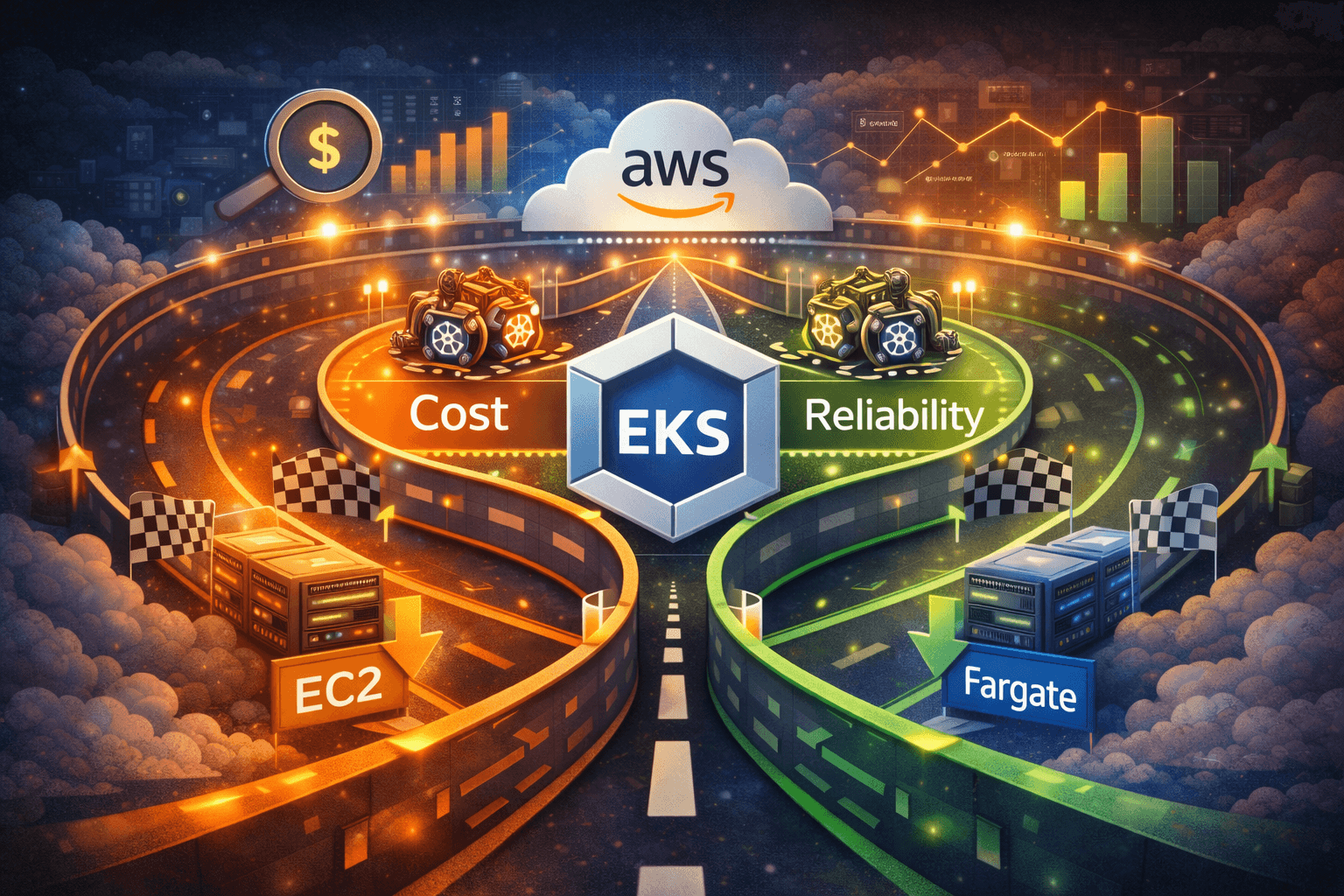
Running Kubernetes on Amazon Web Services has become the default choice for modern cloud-native teams. And Amazon Elastic Kubernetes Service (EKS) makes operating Kubernetes easier—but not cheaper by default.
Without continuous optimization, EKS costs grow silently due to overprovisioned pods, inefficient autoscaling, idle environments, and hidden infrastructure waste.
At Apton Works, we help teams solve this problem using ACORN, an AI-powered cloud operations platform that continuously optimizes cost, reliability, compliance, and performance together.
This article explains:
Why EKS cost optimization matters
The real cost drivers behind EKS bills
Practical, production-safe optimization techniques
How ACORN approaches Amazon EKS cost optimization differently
Why Amazon EKS Cost Optimization Matters
EKS adoption has exploded across startups and enterprises—but Kubernetes cost efficiency has not kept pace.
The problem isn’t Kubernetes itself. The problem is how Kubernetes resources are configured and operated at scale.
Common symptoms we see across EKS environments:
Cloud bills spike even with small traffic increases
Pods request far more CPU/memory than they actually use
Autoscalers add capacity but rarely remove it efficiently
Dev/test clusters run 24×7 with no business value
Teams hesitate to optimize aggressively due to reliability risks
EKS cost optimization is not a finance-only exercise.
It’s a result of well-architected, continuously optimized cloud operations.
Understanding EKS Pricing and Cost Drivers
EKS costs are distributed across four major areas:
1. Control Plane
AWS charges per EKS cluster, per hour.
Running unsupported Kubernetes versions incurs significantly higher fees, making version upgrades a high-impact cost-saving action.
2. Worker Nodes (Largest Cost Component)
This includes:
EC2 On-Demand and Spot instances
Savings Plans / Reserved capacity
Fargate compute (vCPU + memory requested per pod)
Most EKS spend lives here.
3. Storage
Hidden costs often come from:
Orphaned EBS volumes
Unused snapshots
Excessive application and infrastructure logs
These costs accumulate quietly unless audited regularly.
4. Networking
Inter-AZ traffic, load balancers, and chatty microservices can create unexpected recurring charges, especially in multi-AZ clusters.
The Two Core Challenges of EKS Cost Optimization
1. Lack of Visibility
Shared clusters, inconsistent tagging, and poor namespace alignment make it difficult to answer:
Which team or service is actually driving this cost?
2. Operational Risk
Manual tuning of pod sizes, autoscalers, and node groups can easily:
Break performance
Reduce reliability
Create production incidents
This risk makes teams reluctant to optimize aggressively.
10 Practical Amazon EKS Cost Optimization Best Practices
1. Standardize Cost Visibility Across Clusters
Cost optimization starts with clarity.
Best practices:
Enforce consistent tags (team, service, environment, cost center)
Align AWS tags with Kubernetes labels and namespaces
Track cost trends continuously—not monthly
ACORN provides real-time EKS cost visibility by cluster, namespace, and workload, not delayed billing reports.
2. Continuously Rightsize Pods (Not One-Time Tuning)
Most EKS clusters are heavily overprovisioned.
Why?
Developers add large safety buffers to avoid throttling
Requests rarely reflect real usage
Workload behavior changes constantly
The result:
Pods request 3–4× more resources than they use, wasting node capacity.
ACORN continuously analyzes workload behavior and automatically adjusts pod requests and limits—without manual YAML changes.
3. Use Autoscaling—But Avoid Policy Conflicts
Autoscaling is powerful, but dangerous when misconfigured.
Common tools:
HPA (Horizontal Pod Autoscaler)
VPA (Vertical Pod Autoscaler)
KEDA (event-driven scaling)
Cluster Autoscaler or Karpenter (node scaling)
The mistake:
Running multiple autoscalers without coordination, causing them to fight each other.
ACORN orchestrates autoscaling decisions holistically—ensuring pod sizing, replica counts, and node provisioning work together, not against each other.
4. Choose the Right Compute Model: EC2 vs Fargate
EKS offers flexibility—but not every workload belongs everywhere.
General guidance:
EC2 → steady, long-running, high-throughput services
Fargate → bursty, short-lived, or low-ops workloads
ACORN dynamically places workloads on the most cost-effective compute model based on actual behavior, not static rules.
5. Increase Spot Instance Usage—Safely
Spot instances offer massive savings, but require careful handling.
Best practices:
Use spot for stateless and fault-tolerant workloads
Spread across AZs and instance families
Enforce PodDisruptionBudgets
ACORN identifies spot-compatible workloads automatically and manages transitions without service disruption.
6. Schedule and Decommission What You Don’t Need
Idle infrastructure is one of the biggest hidden cost drains.
Examples:
Dev/test clusters running overnight
Forgotten environments
Temporary workloads never removed
ACORN enables:
Scheduled scale-down during off-hours
Automatic scale-up during business hours
Safe decommissioning of inactive environments
7. Commit Baseline Usage with Savings Plans
For workloads that run every day:
Use Savings Plans for predictable baseline capacity
Keep burst capacity flexible with on-demand or spot
ACORN helps identify true baseline usage, reducing the risk of overcommitting.
8. Optimize Storage Defaults (gp3 over gp2)
Many teams still run legacy gp2 volumes.
Best practice:
Default to gp3 for better performance at lower cost
Migrate high-cost volumes gradually with zero downtime
9. Reduce Unnecessary Inter-AZ Traffic
Multi-AZ improves resilience—but increases network costs.
Optimization strategies:
Co-locate tightly coupled services
Use topology-aware scheduling carefully
Use single-AZ clusters for non-critical workloads
10. Codify Cost Optimization via Infrastructure as Code
Manual fixes don’t scale.
Cost optimization should be:
Built into Terraform, Helm, and cluster templates
Enforced automatically for every new cluster
ACORN integrates directly with existing EKS and IaC workflows—no replatforming required.
How ACORN Approaches Amazon EKS Cost Optimization
ACORN is not a cost-reporting tool.
It is an AI-driven cloud operations platform.
With ACORN:
Pods are continuously rightsized based on real usage
Autoscalers receive intelligent, context-aware signals
Node provisioning adapts dynamically to workload needs
Cost optimization never compromises reliability or compliance
Instead of reacting to cloud bills, teams prevent waste by design.
Final Thoughts
Amazon EKS cost optimization is not about cutting corners—it’s about operating Kubernetes intelligently.
The most successful teams:
Treat cost as a runtime metric, not a monthly report
Optimize continuously, not periodically
Use automation to remove human error and hesitation
At Apton Works, ACORN represents this next generation of EKS operations—where cost efficiency, reliability, compliance, and performance are engineered together.