AI-Driven AWS Cost Optimization in 2026: A Practical Guide for Modern Cloud Teams
Dec 10, 2025
Cloud adoption has matured—but cloud cost control has not.
In 2026, most engineering teams running on Amazon Web Services are no longer struggling with how to deploy applications. Instead, they face a more complex challenge:
How do we control cloud spend without sacrificing reliability, performance, or security?
At Apton Works, we work closely with fast-growing startups and enterprises facing this exact problem. This article breaks down practical AWS cost optimization strategies—and how AI-driven platforms like ACORN are changing the way cloud operations are managed.
Why AWS Cost Optimization Is Still Hard in 2026
Despite better tooling and awareness, cloud bills continue to rise due to:
Overprovisioned compute and storage
Static infrastructure in dynamic workloads
Manual cost reviews that lag real usage
Fragmented tools for deployment, monitoring, and optimization
Lack of ownership across engineering and finance
Cost optimization is no longer just a finance problem—it’s an operational architecture problem.
1. Start with Cost as an Architectural Principle
AWS recommends treating cost optimization as a core design pillar, not an afterthought. This means:
Defining ownership for cloud costs
Making cost visibility accessible to engineering teams
Reviewing cost metrics continuously, not monthly
Designing systems that adapt to usage automatically
In modern cloud environments, static infrastructure decisions lead to dynamic waste.
2. Understand Real Utilization—Not Just Spend
Looking at monthly bills alone doesn’t explain why costs increase.
High-performing teams track:
Daily cloud spend trends
Historical cost allocation per workload
Provisioned vs. actually used CPU and memory
The biggest cost gaps usually come from resources that are allocated but rarely used.
AI-powered platforms like ACORN continuously analyze these gaps in real time, instead of relying on delayed reports.
3. Rightsize Compute Continuously (Not Once)
Choosing the “right” instance size is not a one-time task.
Workloads evolve:
Traffic patterns change
Features get added
Usage spikes become unpredictable
Manual rightsizing quickly becomes outdated. AI-driven systems continuously evaluate workload behavior and adapt compute capacity automatically, ensuring performance without excess cost.
4. Use Autoscaling—But Avoid Policy Conflicts
AWS and Kubernetes provide powerful autoscaling mechanisms, but misconfiguration often causes:
Scale-up without scale-down
Conflicts between vertical and horizontal scaling
Increased costs with minimal performance gain
Effective autoscaling requires coordination, context, and intelligent decision-making—something AI systems excel at.
5. Set Intelligent Resource Requests and Limits
Overprovisioning feels safe—but it’s expensive.
Underprovisioning feels efficient—but it’s risky.
The balance lies in:
Setting realistic resource requests
Enforcing sensible limits
Continuously adjusting based on observed behavior
Automated bin-packing and node consolidation ensure infrastructure stays lean without impacting reliability.
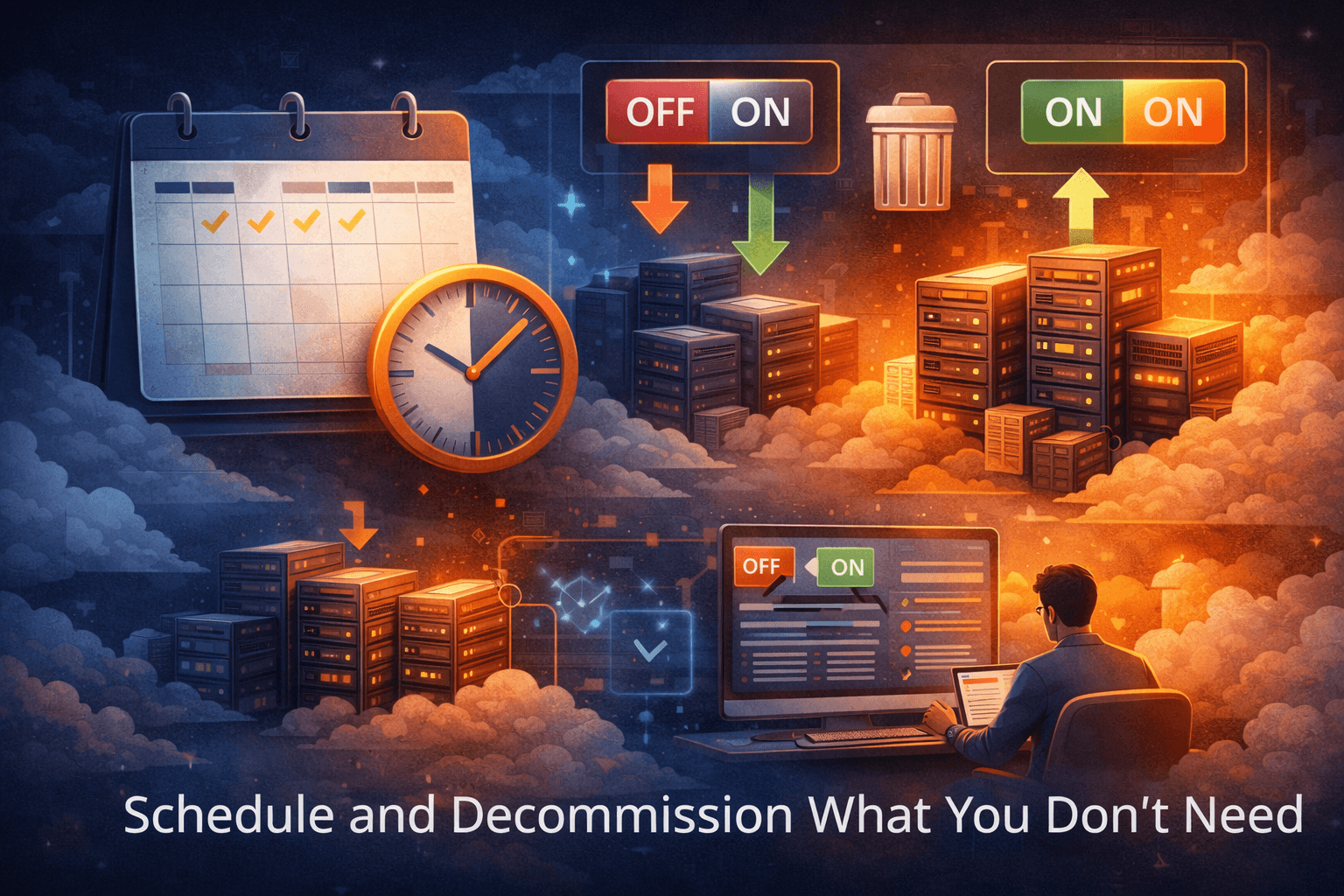
6. Schedule and Decommission What You Don’t Need
Not every environment needs to run 24/7.
Common opportunities for savings:
Development and testing environments
Internal tools used only during business hours
Temporary workloads and experiments
Automated scheduling and safe decommissioning can significantly reduce idle cloud spend—without manual intervention.
7. Use Flexible Compute Models (Including Spot Capacity)
Flexible workloads can benefit from alternative pricing models, but only if:
Failures are handled gracefully
Capacity is rebalanced automatically
Reliability remains intact
AI-driven orchestration ensures workloads are placed on the most cost-efficient compute available—while maintaining uptime and performance guarantees.
8. Move from Manual Optimization to AI-Driven Cloud Operations
The complexity of AWS today makes manual optimization unsustainable.
Modern cloud teams are shifting toward:
Continuous optimization instead of periodic reviews
Automated decision-making instead of static rules
Unified platforms instead of fragmented tools
This is where AI-powered cloud operations platforms redefine what’s possible.
How ACORN Approaches AWS Cost Optimization Differently
ACORN (Apton Compliance, Optimization, Reliability & Networking) is built to treat cost optimization as part of end-to-end cloud operations, not an isolated task.
ACORN:
Continuously analyzes workload behavior
Eliminates overprovisioned infrastructure
Optimizes compute, reliability, and compliance together
Makes cost efficiency a byproduct of good architecture
Instead of reacting to cloud bills, teams prevent waste before it happens.